Rampage
 rampage.framer.website
Context
In Ratatouille a rat hides under a chef's hat and drives him around a kitchen by pulling his hair. Rampage is that joke built at the size of a piece of furniture. You sit down on a giant's head, lean to point it where you want it to go, and pull a braid on either side to swing the fist on that side. You are not playing the giant. You are the villager on top of it, which is the part of the joke that had to survive into the game.
It was the first half of my senior capstone at RIT, made by the same eight people as Comically Large, four designers and four developers, and it was built to be submitted to alt.ctrl.GDC, which is a competition for games you play on a controller somebody made by hand. That turns the usual order of the work around. The controller is not a feature you add once the game is good. It is the entry, and every decision about the game had to be made after the thing you play it on already existed.
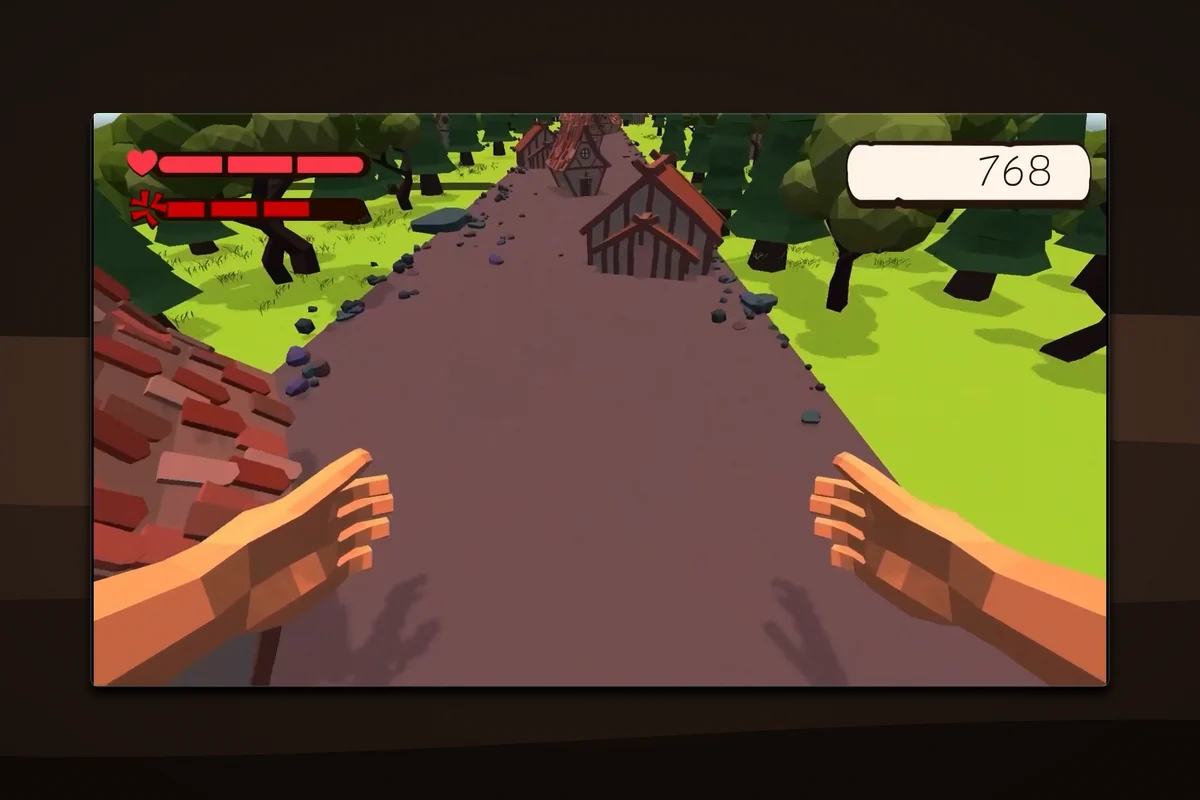
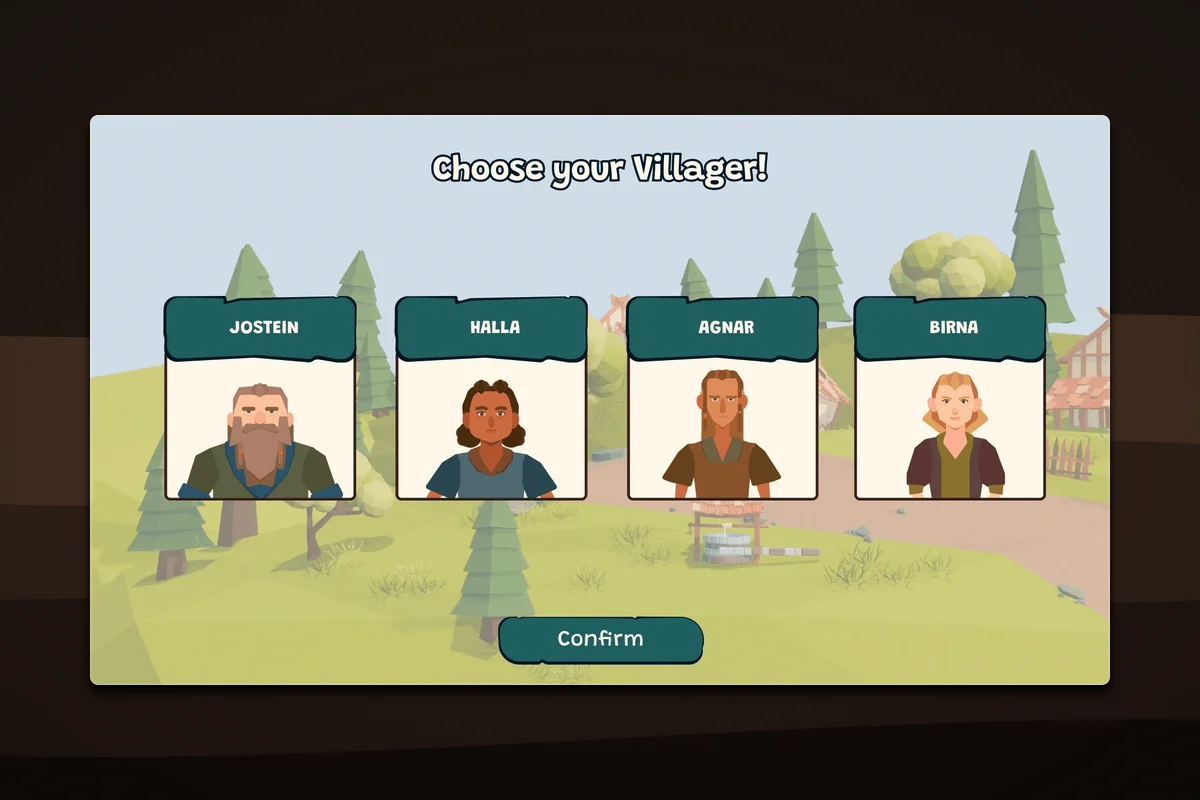
What we fitted to it is an endless runner. You ride at the giant's shoulders, looking down a dirt road at a low poly Nordic village that keeps arriving, and you smash the houses you can reach and lean around the rocks you cannot. You pick a villager before a run, and each of them has their own reason for helping a giant flatten their neighbours. There is a health bar, a rage meter, a score, and a card at the end saying how much you rampaged and how long you lasted. We submitted it in November 2025.
Details
- Role
- Developer
- Team
- Eight, four designers and four developers
- Timeline
- Aug — Nov 2025
- Built with
- Unity, C#, Arduino, Blender
- Deliverables
- The game, the controller, the serial layer between them
- Status
- Submitted to alt.ctrl.GDC 2026
Tech stack
- Game
- Unity·C#·Rigidbody destruction
- Link
- Arduino·Serial over USB
- World
- Blender·Low poly
- Screens
- Figma
- Body
- Corrugated cardboard·Plywood·Yarn·One arcade button
Final artifacts
Key design moments
Nothing about the game was decided until you could sit on it
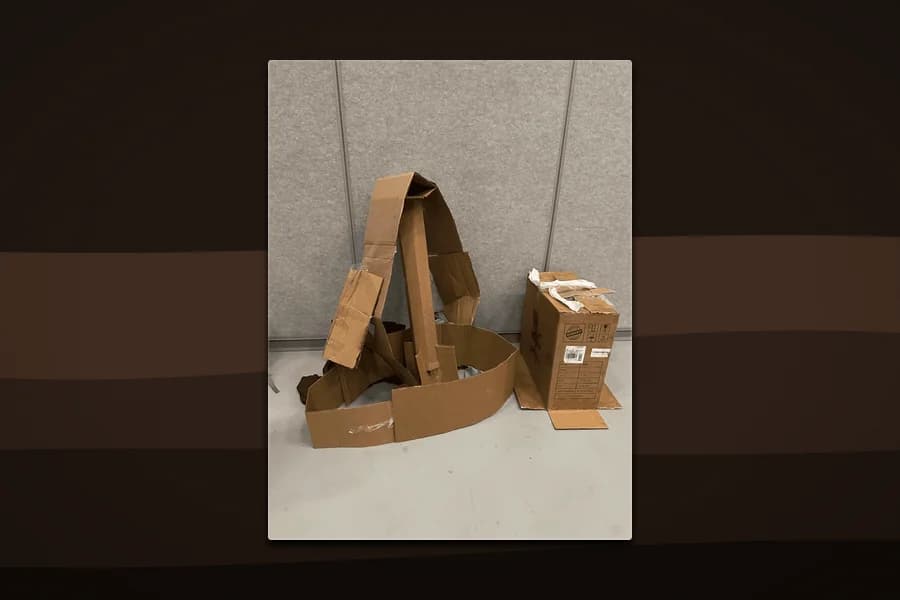
The picture is the first version of the head, which is cardboard and packing tape and has no electronics in it at all. It is there because there is no way to argue somebody into believing that sitting on a giant and pulling its hair is fun. You either sit on it or you do not know. The shape came out of a slicer: a three foot sphere with a hole through the middle, cut into twelve parts across eight sheets of corrugated cardboard and stacked into a ball that will take a person's weight. The finished one has a plywood board through it for a seat, braided yarn for hair, and one green arcade button on top of the head, which is the only button on the whole machine. I wrote every line of the game against a control scheme I had no hand in choosing, and for this competition that is the right way round.
I did not draw one thing you knock down
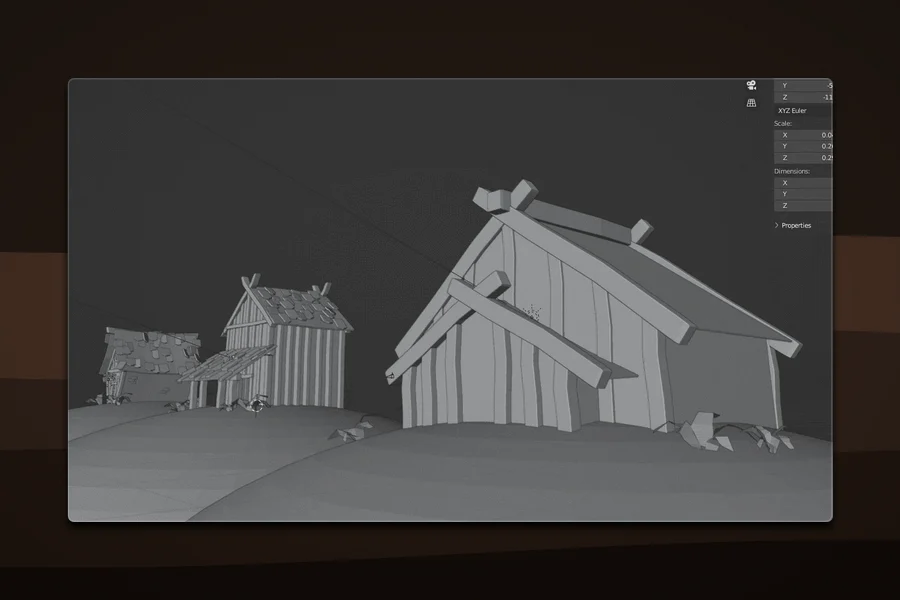
The picture is three of the village houses in Blender before anything has been coloured. The designers made all of that, and my half of the work was to take their files and build a world you can run at speed and pull apart. The destruction is physics rather than animation, so a house does not play a collapse, it comes to pieces, and the roof lands somewhere slightly different every time. That is most of what makes a second run worth taking. The genre chose itself, or rather the controller chose it: with a lean and two braids there is nowhere to put a menu, a map or a second verb, so the road never ends and the village keeps coming. It gave the runs a length too. The one in our submission video lasted two minutes and forty-nine seconds, which is about right for a game with a queue standing behind it.
We set the controller's range with our own arms
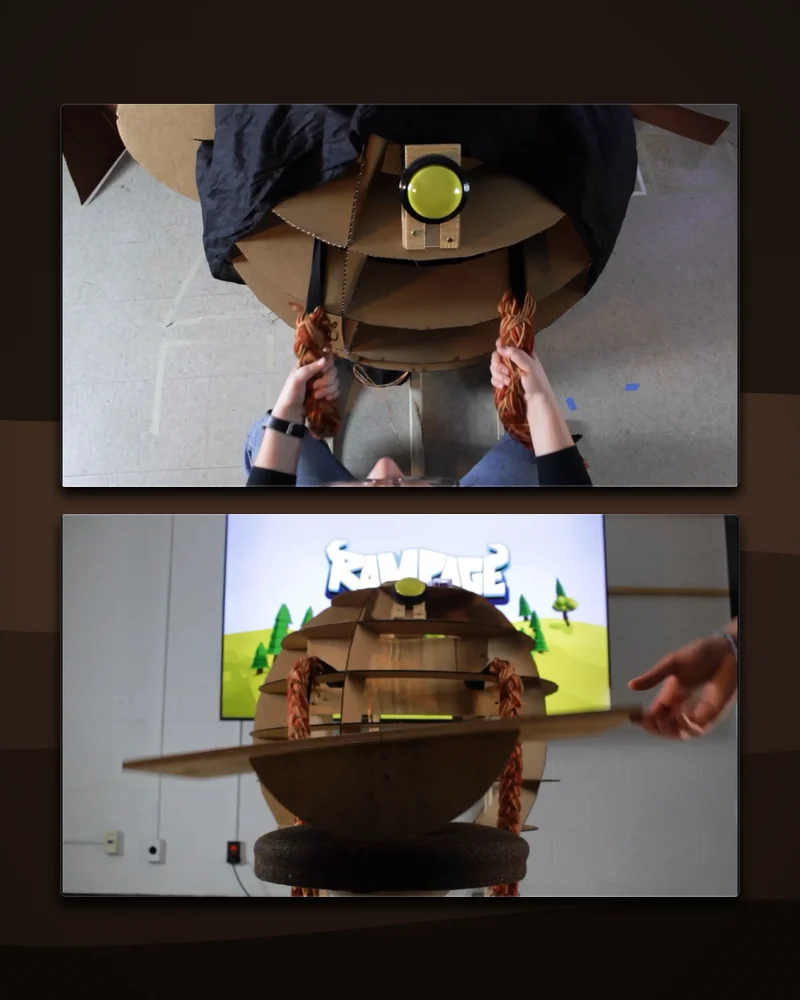
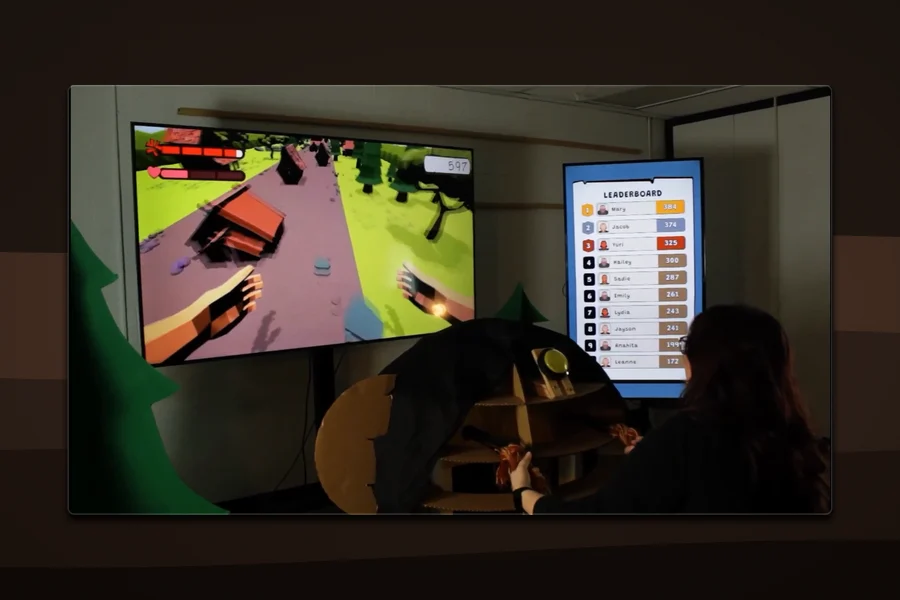
The picture is somebody playing, with the leaderboard on the screen next to them. Everything between the Arduino and the game is a number arriving over serial, and a number means nothing until you decide what counts as a lean and what counts as a pull. That was most of my engineering on this and almost none of it looks like engineering: printing pitch and input values into the Unity console all afternoon, widening a threshold, watching somebody overshoot a corner, narrowing it again. The part I underrated is that we set those ranges against ourselves. Everyone who calibrated the controller had also built it, knew what it was made of, and pulled gently because they knew how long the braids had taken. Somebody who walks up to it at a show has none of that and treats it like a fairground machine, and theirs are the only arms that matter.
Impact
There are no figures on this one and inventing three would be worse than the gap. What happened is that we built it, played it in a room at RIT in front of everybody else's projects, and submitted it to alt.ctrl.GDC 2026 in November. Submitted and selected are two different sentences — only the first one is mine to write. The number I would want, if we had thought to keep it, is how many people sat down and worked out what to do without anybody standing over them, because for a controller nobody has ever seen that is the whole test, and we never counted it.
Reflections
The useful thing I took out of this is what a hard physical constraint does to the rest of the work. Most of what I build is software where anything is possible and the difficult question is which of a thousand available things to make. Here the answer was fixed before I opened Unity: a lean, two braids, one button and one screen, and after that almost every decision made itself. I have gone looking for that shape of problem since, and I did not expect to.
What I would change is how much of it we put in front of people who had never seen it. We spent a long time making the controller solid and the game legible and comparatively little time watching a stranger fail at both, and a stranger failing is the only real information there is about whether a new controller reads. A gamepad has decades of other people's work behind it telling a player what to expect. A cardboard head has nothing, so the only way to find out whether the idea lands is to hand it over and say nothing, and we did some of that and nowhere near enough.